


 Cart
Cart
 sales@molnova.com



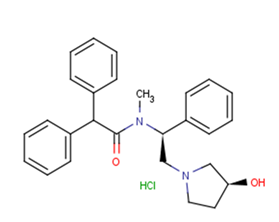
Asimadoline hydrochloride
CAS No. 185951-07-9
Asimadoline hydrochloride( —— )
Catalog No. M17397 CAS No. 185951-07-9
Asimadoline HCl is a κ-opioid receptor agonist potentially for the treatment of pruritus. Asimadoline has also been shown to be used in the treatment of irritable bowel syndrome.
Purity : >98% (HPLC)
 COA
Datasheet
HNMR
HPLC
MSDS
Handing Instructions
COA
Datasheet
HNMR
HPLC
MSDS
Handing Instructions
| Size | Price / USD | Stock | Quantity |
| 2MG | 37 | In Stock |


|
| 5MG | 60 | In Stock |
|
| 10MG | 114 | In Stock |
|
| 25MG | 267 | In Stock |
|
| 50MG | 404 | In Stock |
|
| 100MG | 592 | In Stock |
|
| 500MG | 1233 | In Stock |
|
| 1G | Get Quote | In Stock |
|
Biological Information
-
Product NameAsimadoline hydrochloride
-
NoteResearch use only, not for human use.
-
Brief DescriptionAsimadoline HCl is a κ-opioid receptor agonist potentially for the treatment of pruritus. Asimadoline has also been shown to be used in the treatment of irritable bowel syndrome.
-
DescriptionAsimadoline HCl is a κ-opioid receptor agonist potentially for the treatment of pruritus. Asimadoline has also been shown to be used in the treatment of irritable bowel syndrome.(In Vitro):Asimadoline (EMD-61753) hydrochloride has high selectively in κ: μ: δ opioid binding ratios of 1:501:498 in human recombinant receptors. The IC50 for Asimadoline hydrochloride binding to μ-opioid receptors is 3 μM and to δ-opioid receptors is 0.7 μM. The IC50 values for D1, D2, kainate, σ, PCP/NMDA, H1, α1, α2, M1/M2, glycine, 5HT1A, 5HT1C, 5HT1D, 5HT2, 5HT3, AMPA and kainate/AMPA receptors are all >10 μM.Asimadoline hydrochloride has affinity to sodium and L type Ca2+ ion channels at IC50 concentrations 150 to 800 fold the IC50 for the κ receptors.At high concentrations, Asimadoline hydrochloride demonstrates spasmolytic action against 400 μM barium chloride in the rat duodenum (IC50=4.2 μM), suggesting that Asimadoline hydrochloride may block the direct stimulant effects of barium on smooth muscle through mechanisms that are not identified.(In Vivo):Asimadoline (EMD-61753 hydrochloride; 1, 5, 15 mg/kg; s.c.) acutely ameliorates both formalin-evoked hyperalgesia and tactile allodynia in diabetic rats.The absorption rate following oral administration is 80% in rats and >90% in dogs and monkeys. The metabolism of Asimadoline hydrochloride is rapid and appears similar in animals and man. Asimadoline hydrochloride has peripheral anti-inflammatory actions that are partly mediated through increase in joint fluid substance P levels.Treatment with Asimadoline hydrochloride (5 mg/kg/day; i.p.) produces marked (and sustained) attenuation of the disease with all three time regimes.
-
In VitroAsimadoline (EMD-61753) hydrochloride has high selectively in κ: μ: δ opioid binding ratios of 1:501:498 in human recombinant receptors. The IC50 for Asimadoline hydrochloride binding to μ-opioid receptors is 3 μM and to δ-opioid receptors is 0.7 μM. The IC50 values for D1, D2, kainate, σ, PCP/NMDA, H1, α1, α2, M1/M2, glycine, 5HT1A, 5HT1C, 5HT1D, 5HT2, 5HT3, AMPA and kainate/AMPA receptors are all >10 μM. Asimadoline hydrochloride has affinity to sodium and L type Ca2+ ion channels at IC50 concentrations 150 to 800 fold the IC50 for the κ receptors. At high concentrations, Asimadoline hydrochloride demonstrates spasmolytic action against 400 μM barium chloride in the rat duodenum (IC50=4.2 μM), suggesting that Asimadoline hydrochloride may block the direct stimulant effects of barium on smooth muscle through mechanisms that are not identified.
-
In VivoAsimadoline (EMD-61753 hydrochloride; 1, 5, 15 mg/kg; s.c.) acutely ameliorates both formalin-evoked hyperalgesia and tactile allodynia in diabetic rats.The absorption rate following oral administration is 80% in rats and >90% in dogs and monkeys. The metabolism of Asimadoline hydrochloride is rapid and appears similar in animals and man. Asimadoline hydrochloride has peripheral anti-inflammatory actions that are partly mediated through increase in joint fluid substance P levels. Treatment with Asimadoline hydrochloride (5 mg/kg/day; i.p.) produces marked (and sustained) attenuation of the disease with all three time regimes. Animal Model:Adult female Sprague-Dawley ratsDosage:1, 5, 15 mg/kg Administration:SC; single dose Result:Acutely ameliorated both formalin-evoked hyperalgesia and tactile allodynia in diabetic rats.
-
Synonyms——
-
PathwayAngiogenesis
-
TargetVEGFR
-
Recptorκ-opioid receptor
-
Research Area——
-
Indication——
Chemical Information
-
CAS Number185951-07-9
-
Formula Weight451
-
Molecular FormulaC27H31ClN2O2
-
Purity>98% (HPLC)
-
SolubilityIn Vitro:?DMSO : 240 mg/mL (532.15 mM)
-
SMILESCl.CN([C@H](CN1CC[C@H](O)C1)c2ccccc2)C(=O)C(c3ccccc3)c4ccccc4
-
Chemical Name——
Shipping & Storage Information
-
Storage(-20℃)
-
ShippingWith Ice Pack
-
Stability≥ 2 years
Reference
1. Camilleri M, et al. Asimadoline, a κ-Opioid Agonist, and Visceral Sensation. Neurogastroenterol Motil. 2008 Sep; 20(9): 971–979.
molnova catalog



related products
-
Tyrphostin AG1433
Tyrphostin AG1433 is an inhibitor of tyrosine kinases and also a dual inhibitor of PDGFRβ(IC50s = 5.0 μM) and VEGFR-2 (Flk-1/KDR)(IC50s = 9.3 μM).
-
Tivozanib
A highly potent inhibitor of pan-VEGFR with IC50s of 60/6.5/15 nM for VEGFR1/2/3.
-
TIE-2/VEGFR-2 kinase...
TIE-2/VEGFR-2 kinase-IN-5 (TIE-2 and VEGFR-2 tyrosine kinase receptor inhibitor) is a potent agent with anti-angiogenic activity, commonly used in biomedical research focused on angiogenesis.
